The Elements of Dance
A part of the Ontario Dance Curriculum is the exploration of the elements of dance. These elements are similar to Laban's Theory of Movement (see post 9), where body, effort, space and shape are its central tenets.
Likewise, the Ontario Curriculum has listed 5 elements of dance, that are explored at different Grade levels throughout junior/intermediate classrooms.
The 5 elements of body, space, energy, time and relationship are described in detail below:
I have included a useful video that also describes these elements using examples of dance! This video could be played and therefore modelled to students that are studying and using these elements.
In our dance class, we made use of the cards in the photo above, in almost every dance lesson. These cards are wonderful as they are prompts to various movements that could be modified using different elements of dance. For example, the element of body (e.g., shapes), or space (e.g., negative) could be applied to the movement "expand". The element relationship (with another person) could be applied with the movement "push". There are endless possibilities!
I plan to find and use this fantastic resource in my own classroom. For example, I could use them when integrating dance and math. I could ask students to show probabilities, percentages, or fractions with the movement "reach". Students could work on the element "relationship" and they could show, with their bodies, a different percent or probability. An example would be where one student was 'highly likely' and the other 'unlikely', they could both "reach" different ways to communicate this idea.
These were always fun to explore and I think students will love using them as well!
Guiding Theories in Dance Education
In this post, I will discuss two main theories that have influenced the way my colleagues and I had planned our dance lesson activities for our class. In addition, I plan to use these theories as a both a reference and guiding point for when I integrate dance into other curriculum areas.
The Laban Movement Theory
Rudolph Laban viewed movement as the processes in which the body is used for communication. He stated that movement is part of a holistic and intertwined connection between the mind, body and spirit. And with that, one moves in a subconscious effort to externalize inner motivations for movement.
The theory can be dissected into three areas that are as follows: how one moves, what one moves and where does one move. Furthermore, Laban describes that creative dance is made up of four elements that are: the body, relationship, space and effort.
Additionally, Laban described how exactly movement could occurs and identified these movements into four parts:
direction
weight
speed
flow
An example of Laban's effort movements are displayed below:
Laban's theory is important for dance because students are able to use the creative process and express their thoughts between the mind, body and soul through these movements. Students can in turn analyze what movements work for the different messages they are trying to convey, using their bodies. They could also figure out how to express their thoughts by viewing elements of dance cards, for example. *I will elaborate on this concept in post 10!
Gardner’s Theory of Multiple Intelligences
Howard Gardner classifies intelligence and abilities into nine possible areas. These area are musical, verbal linguistic, intrapersonal, mathematical-logical, visual-spatial, musical, interpersonal, bodily/kinaesthetic and existential.
Educators could use this theory as a guiding point to differentiate to all learners in the classroom and more importantly, create lessons that are designed by the Universal Design for Learning. This theory is another way where the needs of learners can be met and classrooms could be inclusive and positive spaces. Dance is where multiple intelligences could definitely be integrated in. Students could take creative risks and undergo the creative process to convey messages in way where they feel comfortable. Students could also contribute to the creative process with other group members using their own multiple intelligences, to thus give groups perspective and new ideas.
An Example of What Canadian Schools Should be Doing
This principal is an example of what our Ontario principals should be suggesting for our schools! I could not stop watching this amazing video below:
The students have learned a dance routine and are using a choreographed sequence. They are also getting their daily physical activity in, which is so important as many students in Ontario do not get the recommended 20 minutes of rigorous physical activity per day (Statistics Canada, 2015).
"[o]n a recent visit to Canada, British education guru Sir Ken Robinson suggested that the answer to Ontario's abysmal math scores may not in fact be more math, as recommended by the province's Ministry of Education, but more dance. Dance? Yes, dance. Movement not for movement's sake, but for the sake of well-being, creativity and balance: the things that make learning possible" (Globe and Mail, 2017).
I completely agree. Dance is definitely one way that students could get their desperately needed physical activity, while they get the benefits of creativity and expression as well!
Zumba
Not too long ago, my colleagues and I lead a Zumba lesson as part of integrating the physical education curriculum (including DPA) with dance. We focused on a Grade 6 activity.
In the lesson, we wanted to teach students various movements related to dance, as an activity for DPA (Daily Physical Activity). Daily physical activity has been shown to improve student memory, problem-solving, student attitude, behaviour and creativity.
The purpose of the lesson was to expose students to a variety of movements that can contribute to the recommended 20-minutes of daily physical activity. Movement, and more specifically dance-type movement to music, is an engaging way to integrate DPA and encourages active participation.
Allowing students to explore movements to different types of music will hopefully inspire them to continue their DPA at home and elsewhere. Our ultimate aim was to allow students to reflect on the factors within this lesson that may have contributed to their enjoyment of physical activity.
This can also be an introduction to a dance unit, as a DPA activity. Overall, this was a very successful lesson and our teacher candidates had fun. I will definitely be incorporating dance as a DPA activity in the classroom. Below are the curriculum areas that were covered.
A1. Creating and Presenting: apply the creative process to the composition of short dance pieces, using the elements of dance to communicate feelings and ideas
A1.3 use guided improvisation in a variety of ways as a starting point for choreography
A. Active Living
A1. Active Participation: participate actively and regularly in a wide variety of physical activities, and demonstrate an understanding of factors that encourage lifelong participation in physical activity
A1.2 demonstrate an understanding of factors that contribute to their personal enjoyment of being active
I really love social studies. I feel that the Arts could easily be incorporated into this strand. Thus, another favourite activity of mine that was lead by my colleagues was one that used both dance and social studies!
The Activity - Natural Disasters
The video below is a highly skilled choreographed dance. It is not expected of students to perform dance in this professional manner, although I wanted to include it to show the emotions and strong movements of the dancers in the video. The music and artistic decisions made by the dancers here further enhance the message of their art.
This cross-curricular lesson was planned for Grade 7 students, for their Geography strand. Below are the curriculum expectations from pages 166 - 169.
Geography: Overall Expectations
A2. Inquiry: Use the geographic inquiry process to investigate the impact of natural events and/or human activities that change the physical environment, exploring the impact from a geographic perspective
A3. Understanding Geographic Context: Demonstrate an understanding of significant patterns in Earth’s physical features and of some natural processes and human activities that create and change those features Specific Expectations
Specific Expectations:
A2.1 Formulate questions to guide investigations into the impact of natural events and/or human activities that change the physical environment
A2.5 Evaluate evidence and draw conclusions about the impact of natural events and/or human activities that change the physical environment
A3.7 Describe some key processes and other factors, including human activities
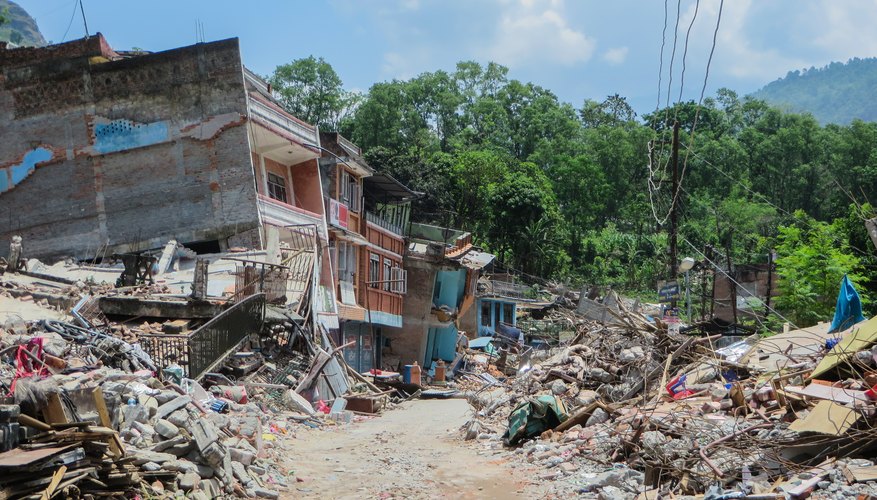
The activity began by the teachers having photographs of natural disasters on chart paper. Students were placed into groups and walked around adding verbs of what was going on in the photo. For example, a photograph with a tsunami had verbs written like crush, pour, devastate, etc,.
In the next part of the activities, the groups needed to create dance movements using dance strategies.
The elements of dance that were used in this lesson were body, space and relationship (please see post #6 for a further explanation of these elements, or the Ontario Elementary Arts Curriculum). My Lesson Reflection
I really liked this lesson because we were able to interpret the sad realities of natural disasters, using strong verbs to guide our movements. Furthermore, we were able to display an emotional response to the images we saw and the natural disasters we learned about.
I would love to incorporate this type of lesson into a future classroom. I believe students will be able to build empathy by performing the dance movements that bring out understanding and emotion. It is a great way to explore dance strategies while working on the social studies curriculum. Further Exploration
In this post, I would like to highlight another activity that my colleagues and I lead with our class. In this activity, we chose to incorporate dance and science!
Science is another curriculum area that students may potentially struggle with. This might be be because science is content heavy with a lot of new and different terminology. Also, scientific processes are sometimes abstract as well (i.e., physics, chemistry and sometime biological processes, etc.)
The Curriculum
First of all, I will discuss the curriculum area that we chose to integrate in this lesson. We chose to revolve this lesson around Grade 5 science, exploring the strand: Understanding Matter and Energy - Properties of and Changes in Matter. Below are the overall and specific expectations covered in this lesson!
Dance: Overall Expectations (OE) -
A1. Creating and Presenting: apply the creative process to the composition of movement sequences and short dance pieces, using the elements of dance to communicate feelings and ideas (The Ontario Curriculum; Grades 1-8: The Arts, 2009, p. 110)
Specific Expectations (SE) -
A1.1 translate into movement sequences a variety of images and ideas from other classroom subjects, including the arts (The Ontario Curriculum; Grades 1-8: The Arts, 2009, p. 110)
A1.3 use movement in the choreographic form call and response in a variety of ways when creating dance pieces (The Ontario Curriculum; Grades 1-8: The Arts, 2009, p. 110)
A1.4 use the element of relationship in short dance pieces to communicate an idea (The Ontario Curriculum; Grades 1-8: The Arts, 2009, p. 111)
Specific Expectations (SE) -
3.1 identify matter as everything that has mass and occupies space (p. 106)
3.2 identify properties of solids, liquids, and gases and state examples of each (p. 106)
3.3 explain changes of state in matter and give examples of each (p. 106)
The Lesson
In this lesson, students were put into groups and were assigned an object in a state of matter (i.e., water in the liquid state, etc.). Using flocking, they were to create a movement representing that object. Next, students were to work with group(s) that are in different states of matter, and will use a narrative dance form to create a story that shows the changes in matter, from one group to the other. Dance Strategies & Conventions Used Flocking- A type of improvisation in which students move in groups, with no set pattern or in a diamond formation, following a leader and all doing the same movements simultaneously. This is an extended version of mirroring for three or more people. Participants do not necessarily need to be able to watch each other, as long as they can see the leader. (The Ontario Curriculum; Grades 1-8: The Arts, 2009, p. 161)
Narrative- A choreographic form that follows a storyline, often conveys a specific message, and usually includes an introduction, rising action, a climax, and a resolution (e.g., the ballet The Nutcracker) (The Ontario Curriculum; Grades 1-8: The Arts, 2009, p. 163)
Body- Body awareness, use of body parts, body shapes, locomotor and non-locomotor movements, body bases, symmetry versus asymmetry, geometric versus organic shape, angular versus curved shape (The Ontario Curriculum; Grades 1-8: The Arts, 2009, p. 110)
Energy- Effort, force, quality (e.g., slash, press, shrink, open) (The Ontario Curriculum; Grades 1-8: The Arts, 2009, p.110)
Time- Tempo: pace, rate or speed. (The Ontario Curriculum; Grades 1-8: The Arts, 2009, p. 110)
Relationship- Students in Grade 5 will develop or extend understanding of the following concepts through participation in various dance experiences (e.g., communicating images and ideas through movement), with particular emphasis on relationship. (The Ontario Curriculum; Grades 1-8: The Arts, 2009, p.110)
TED Talk About Dance and SCIENCE!
I would like to end off with this riveting TED Talk. The speaker, John Bohannon, discusses how Dance could and should be used in other areas, especially, SCIENCE!
I really appreciate the message behind this TED Talk. Using dance can truly reach both kinaesthetic learners and visual learners, that may truly benefit from either watching, or performing, concepts in science to help with their learning. And I do agree, the PowerPoint is way overused!
Drama and dance are artistic forms that create positive and inclusive spaces for all learners.
I would therefore like to dedicate this entire post to a compilation of strategies that could be used to incorporate both the Universal Design for Learning (UDL) and differentiated instruction (DI). Learning for All (2013) further discusses the UDL and DI models for Ontario classrooms.
Here is a list of strategies and convention modifications that could be done to help all learners achieve the learning goals of the lesson.
incorporate partners and group work, to help students develop ideas
groups could be pre-determined and partners could be switched often
incorporate individual work, if students are not willing to work in groups
dim the lights when students are performing
during warm-ups, have students close their eyes or face the wall if the class is timid
having a student scribe for another student, in the Graffiti Wall activity, for example
providing students with materials and expectations ahead of time, so that they are comfortable with the subject(s) and what is expected of them
having anchor charts with visual aids and/or word walls, so that students could refer back to dance and drama strategies and conventions
have written instructions of the activity for visual learners
explain instructions orally, have students repeat back instructions of the activity, so that they understand
take time to answer questions and be patient with students, use guiding questions
provide enough time for students to go over their creative process because a lot of the learning comes from students undergoing the creative process
the teacher could model the activities to show students the expectations
include technology, for example, PowerPoints and SmartBoards to help guide students through the lesson
provide video examples for inspiration or video instruction as a modelling activity
graphic organizers could be used to help students develop and work through their ideas during the creative process
students with limited motor abilities could remain seated and participate with other able body parts, or they can have another leadership activity to feel included in the classroom (i.e., help the teacher set up the materials)
be aware of the physical space in the room and any limitations that may exist
make sure students are comfortable with noise levels in the classroom, especially with playing music for dance or high-energy activities
for dance, the number of steps could be reduced
the teacher could pre-determine ideas for students that are struggling to come up with one during their creative process
provide scripts for students during drama activities, if needed
students could display their dance or drama in front of the teacher only or in front of a small group of students, for example
students could pre-record their presentations, using technology
students could outline and write a reflection of their performance, instead of performing it
know your students, be aware of their learning styles (i.e., Multiple Intelligences Theory - see post 9) and understand each learner's needs
if a student has a limitation whether that be cognitive or physical, they can do fewer movements and actually repeat certain steps. Students with special needs should be situated near the teacher to facilitate learning and minimize distractions
do fewer combination dance moves or just move their legs or arms
eliminate some of the more complicated dance moves
if they need modifications, change the movements completely and have them do a different dance move (or none) dependent on their capability or religious beliefs (some might not be physically able to participate - these students could be assigned roles: for example, watching to make sure people are participating fairly, helping the teacher choose songs or change them, sit at their desks/wheelchair and move their hands or feet only, have a student help another student with different abilities, etc.
students can be paired up with a buddy to practice movements
teacher can prompt student with visual cues (anchor chart with specific moves to help give students ideas for their routines)
students can follow at a slower pace
groups could be made larger or smaller
music could be changed to be at a slower tempo, if some students cannot handle the excitement and sounds of fast paced music
This is a very relevant topic for me because I have seen many students struggling with math concepts in the classroom! As a teacher, I am always looking for ways to help students in math and I absolutely love the idea of incorporating drama and dance into the subject!
When thinking of how to use dance and drama to help students with math, I usually get stuck because I know math has so many abstract concepts. Also, a lot of things in math need precision and accuracy, and having something done artistically doesn't really seem like it would fit into a math class.
During our drama AND dance class, however, we were introduced to a few ways where dramatic arts can be implemented to help students with math concepts!
Angles with Drama
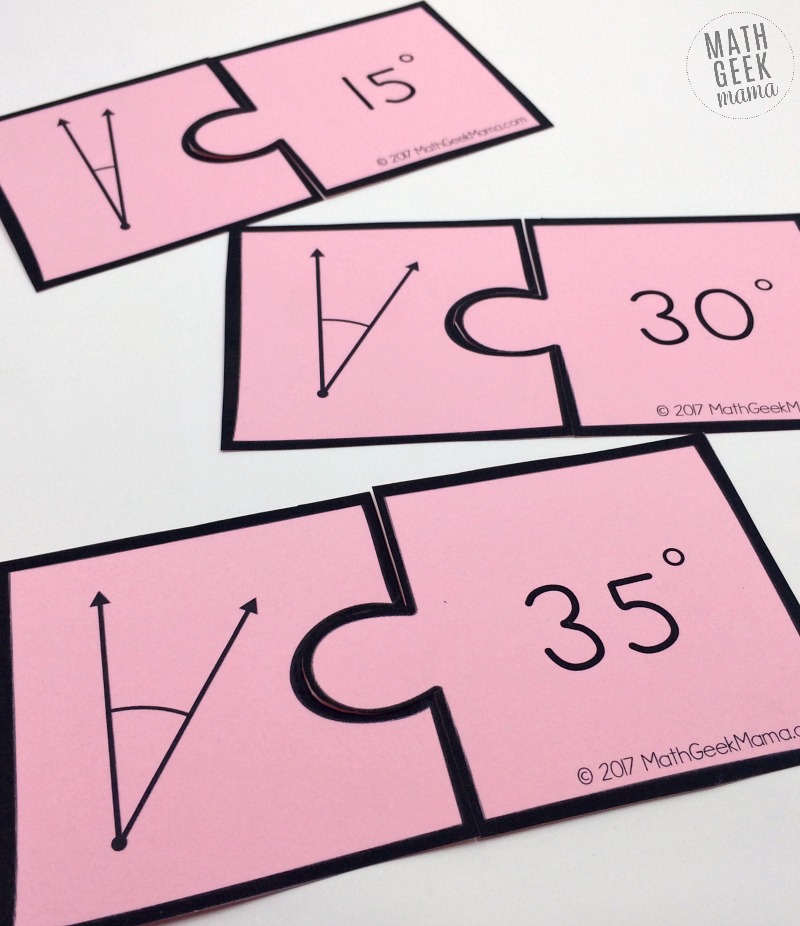
A fun dramatic arts activity that we tried as a class was related to memorization and repetition. We all got in a circle as a class. The first person (A) had a piece of paper that had a type of angle (i.e., obtuse, acute, straight & right).
That person (A) looked at the person (B) beside them and stated, A: "THIS IS A ____ ANGLE". Their partner (B) now had to say, B: "A WHAT?", then they (A) replied, A:"A ____ ANGLE". Lastly, the partner (B) replied, B: "OHHH, A ____ ANGLE".
This activity continued around the circle (with several papers of angles) until all students got a chance to be both person A and B.
This concept lets students repeat math concepts and helps them gain the knowledge and understanding of key terms in ideas in math. Doing this activity would be a great way to help students prep for a test or assignment, as it allows them to memorize and cement the terms into their knowledge!
Angles with Dance
The same math concepts with a different approach! Teachers could also incorporate dance within an angles lesson. The video above is one way that students could show their knowledge and understanding. I will discuss a different, although very similar activity that we did as a class!
In this dance approach, we used mirroring as a technique to help students learn angles.
The activity consisted of partners. With music in the background, one partner (the leader) had to show a type of angle with their body, however they felt appropriate (i.e., a straight angle by extending both arms out to represent this). Their partner had to mirror their movements. They would switch roles so that both could be leaders and create these movements.
In the end, the partners had a sequence of angles and moved their bodies fluently to the music, switching between the angles they had to create as one partner was the leader.
Dance, Patterns and Math
One terrific activity that was led by my fellow colleagues incorporated patterns and math. With bodily movements and dance strategies, we created patterns that led up to creating an AB dance sequence.
The elements of dance that were used were:
Body - the use of the body into forming shapes that create patterns
Space - positive space (the dancer's forms and shape) and negative space (empty space around the dancer) that incorporated directions, pathways, levels and patterns
An AB sequence is: a choreographic pattern form with two parts, that has an A part and a B part. The dance form has two distinct dance sequences or parts.
Here, students got a chance to explore patterns by creating growing and/or shrinking patterns using dance! If the pattern was shrinking, they would take away elements of from their AB sequences and vice versa if the pattern was growing.
I really enjoyed choosing the drama strategies that we incorporated into our group's Social Studies presentation (as discussed in the first entry). Again, our goal was to have students build empathy and to do that, students needed to deepen their understanding of the characters that they were dramatizing.
There are several theories related to characterization in the dramatic arts. It is really an important facet of drama because students are taking on the role or persona of a different character (whether it be a person or not) (BBC, 2019). I want to first highlight a strategy that can help with understanding the points of view of others. Understanding points of view are expectations in both the Social Studies and Language Arts curricula.
Voices in the Head
As discussed in my first blog post, the Ontario Curriculum defines 'Voice in the Head' as, "[a] convention used to deepen students’ understanding of a conflict or a difficult choice facing a
character in the drama. The student representing the character remains silent while others standing behind speak out to
express the thoughts and feelings the character might be experiencing at this point (The Ontario Curriculum Grades 1-8,
The Arts, 2009, page 174)". I will now get into further detail about this very fun and interesting strategy!
via GIPHY
This is a great exercise to do with junior/intermediate students in a Social Studies or Language Arts class. Having students think deeply about a characters' thoughts, feelings and inner motivations are really important to understanding character development in a novel, for example, or the point of view from an article.
Voices in the head could also be done with things that are not people. For example, in science students could act as if they are a polar bear affected by global warming, and the implications to that polar bears food chain. There are so many ways to use this drama strategy in a cross-curricular lesson.
Choral Reading
The Ontario Curriculum defines 'Choral Reading' as, "[t]he reading or
reciting of a text by a group. Preparation for a
performance may involve interpretation of the
text; experimentation with language, rhythm,
volume, pace, and different numbers of voices;
and rehearsal (The Ontario Curriculum Grades 1-8, The Arts, 2009, page 166)". The video below is an example of what this drama strategy might look like in a classroom.
Choral reading is a strategy that I could see my self implementing in the classroom. It could essentially be used with any text in any subject. One way it could really benefit students would be with their oral reading skills. I have seen students in my placement that did not have great oral reading skills. For example, they would pause at a period, they would not lift their voice for a question mark, or they would have a monotone way of speaking.
Choral reading allows students to really work through their vocal techniques when reading and apply it to their overall oral presentation skills. Lastly, students could benefit by hearing others speak and making sense of the possibly new and unfamiliar words and the sentences they are reading and using.
Science could be a very visual and kinaesthetic subject. A lot of students cannot just read about concepts (sometimes abstract) in science, they need to visualize and be a part of their learning. In addition, human anatomy and physiology is dense can be complicated for young learners. Having multi-modal representations of this subject can allow students to really understand what they are learning, as opposed to memorizing where everything is located, for example.
Below is a very fun and interesting drama strategy we did in class focused on the Grade 5- Understanding Life Systems: Human Organ Systems science strand!
The Activity - Dramatization of the Human Digestive System
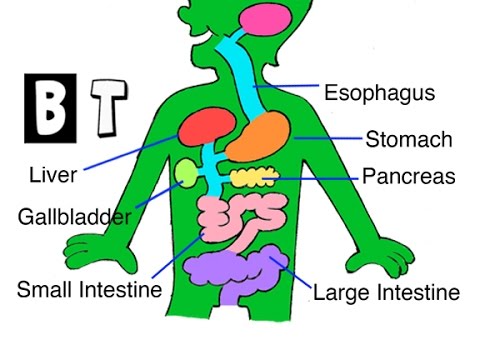
In this activity, we were assigned roles as different parts of the digestive system (e.g., stomach, large intestine, mouth, etc.). My partner and I were assigned the pancreas (a teacher tip would be to have a PowerPoint on the board that briefly lists the functions of each organ).
The task was to use drama to:
- create a movement that represents the pancreas &
- add on a sound the movement that represents the pancreas.
After we used the creative process (as seen in the first post), we created our brief movement with accompanying sound. The best part was when the entire class got into a line starting at the mouth and ending at the anus. We all performed our pieces and we all got to see a functioning digestive system! Younger students would be really engaged in this presentation because they can explain the reasons why they chose their movements and sounds and they will better remember the system when they look back and visualize what each organ (group) did.
The video below is an example of what my fellow teacher candidates created in their drama class!
One curriculum area I often think about when having to incorporate drama in the classroom is Social Studies. Since Social Studies deals with issues that involve human relations and interactions to other things (e.g., other people, the environment, animals, etc.), building empathy is an important concept.
In particular, the Ontario Social Studies curriculum states that the Citizen Education Framework promotes character traits that students should have and they are, "self-respect, as well as respect and empathy for others" (Ontario Social Studies Curriculum, (2018), p.10).
Brainstorm Productions state that, "drama is an opportunity for children to explore and mirror difficult and challenging emotions. A person can safely watch an actor bully another actor, and can learn how both parties experience and respond to this situation. They can learn about the consequences" (Brainstorm Productions, 2016).
Grade 6 Activity - Building Empathy towards Canada's Indigenous Issues
An activity that we did in class used these principles. We chose to touch on Indigenous issues using a short-story picture book titled, When We Were Alone by David Robertson.
The aim of the presentation was to discuss the implications of residential schools in Canada and the points of view of the characters. We wanted our students to ultimately build character empathy using drama to re-enact important parts of the picture book. This lesson could be done with Grade 6 students, although could be modified to other grades as well.
Guiding Theory
We used the guiding theory of Bloom's Taxonomy. As students work through the pyramid, they reach the highest level which is "create". That means that they have mastered all of the other levels and by creating, they are able to learn in a more sophisticated and deeper way.
Bloom’s Taxonomy Theory (2019). Image. Retrieved from https://cft.vanderbilt.edu/guides-sub-pages/blooms-taxonomy/.
By going through the creative process (i.e., challenging and inspiring, imagining and generating, planning and focusing, exploring and
experimenting, producing preliminary work, revising and refining, presenting, performing, and sharing, reflecting and
evaluating (The Ontario Curriculum; Grades 1-8: The Arts, 2009, p. 20), students creating drama strategies to represent this social studies issues will facilitate a deeper understanding of the overall paradigms and concepts.
Drama Strategies From Our Lesson Tableau: usually describes an action scene.
“A group of silent, motionless figures used to represent a scene, theme, or abstract idea (e.g., peace, joy), or an important moment in a narrative. Tableau may be presented as stand-alone images to communicate one specific message or may be used to achieve particular effects in a longer drama work. Important features of a tableau include character, space, gesture, facial expressions, and levels.” (The Ontario Curriculum; Grades 1-8: The Arts, 2009, p. 172)
Voice-Over Narration: a narrator speaking either in the scene or outside of the scene
“A convention in which a speaker describes the action that is occurring in a drama.” (The Ontario Curriculum; Grades 1-8: The Arts, 2009, p. 170)
Voices in the Head: a character's inner feelings, motivations and/or thoughts are voiced by other characters in a scene. *I will go into further detail about this engaging strategy in my third post!
“A convention used to deepen students’ understanding of a conflict or a difficult choice facing a character in the drama. The student representing the character remains silent while others standing behind speak out to express the thoughts and feelings the character might be experiencing at this point. See also corridor of voice.” (The Ontario Curriculum; Grades 1-8: The Arts, 2009, p. 174)
Flash Forward: a scene from the future - looking ahead to what could happen with a scene if future events were to occur.
“A convention used to provide different perspectives on the action in a drama by showing events from a later time. A flash forward might be used to show an action in the light of its imagined or actual outcome.” (The Ontario Curriculum; Grades 1-8: The Arts, 2009, p. 168)